
It is common practice to make a list of essential features, think about them for a while, and then decide that they define the next release of our product. The next question, of course, is “when will all this be done?”
The answer is that no one knows. We could do a lot of work to improve our not knowing, and in some areas and at some times some of that is worth doing, such as when there’s a large contract waiting to be bid. But when we’re in the business of developing solutions for internal or external customers, we do best to provide small amounts of value frequently, not wait for Big Bang releases that seem often to recede indefinitely into the future.
…
You’re trying to get into a frame of mind where you think “If we just did this one little thing, Customer Jack could actually use this”. Then, do that little thing and let Customer Jack try it. We want to move as quickly as we can to continuous delivery of value.
We want to make the value of what we’re doing so visible that our Product Owner and other stakeholders can’t wait to get it out there. Then … we’ll be doing the right thing, with, or without, story estimates.
Ron Jeffries - Story Points Revisited
Ron Jeffries on Prediction


Bring Engineers Problems, Not Solutions
I read a great article posted to Hacker News this week called Effective Communication With Software Engineers by Simón Muñoz.
He made some wonderful points that rang true for me, as a software engineer, that I wanted to discuss here.
What resonated most with me is this idea that as engineers, we want to know the high-level goals of the product we work on, why they're important, and be given the leeway to design solutions.
You don’t present a solution to an engineering team; you bring them a problem to solve. The best engineers won’t willingly accept implementing a solution if they have not participated in defining it.
I've written about this idea before in my post Goals, Not Tasks. Engineers don't want to be treated like highly-paid instruction followers—they want to understand business objectives.
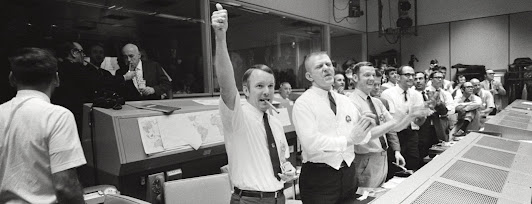
And not only do we want to know what the high-level objectives are, we want to know why they are important to real users of the product. Simón continues…
Starting with the problem is not enough. You have to demonstrate how solving this problem fits with the vision and strategy of the company. Your team also has to understand why you want to solve this particular problem and not any other.
It's so much more motivating to work on a product when you can see that real people are benefiting from it, and you're not just fulfilling some manager's dictum. Simón mentions the importance of proving to the engineering team that the work they are doing is "moving the needle"…
Your engineers want to know if their work impacts the organization. A huge smell that they are working in a feature factory rather than as product engineers is when you don’t define how to measure the success of an initiative.
We don’t measure success by the number of story points that the team manages to get each sprint... We measure success by moving the needle on the metrics that matter to the business.
If you don’t obsessively communicate the importance of these and can’t get your team interested in them, you’re losing much of their value.
We engineers want to know what are the important problems to solve, why are they important, and be given the freedom and respect to invent solutions to those problems.
Finish Things
In Lean, there's a lot of talk about reducing work in progress (WIP). It's interesting to me that even though it seems that Lean concepts have permeated the software industry, so many teams struggle with finishing things.
Speaking from the point of view of a developer, I can say that there's a real drag on morale when it feels like no one particularly cares about receiving the value of my work. Obvious bottlenecks in a team's process that persistently go unaddressed are not just a waste of money, they're a reason for people to check out. Add to this malaise the tedium of fixing the continuous merge conflicts that come when we create code branches that we can't merge for a long time. Ugh.
Some common impediments to finishing things:
- Slow code reviews
- Exhaustive manual testing
- Distracted product owners
Slow code reviews
I've long been of the opinion that most code reviews are hardly worth the time spent on them by the reviewer and not worth the interruption to the flow of work that they cause. It's really hard to do good code reviews and it's a major bummer to wait a long time for someone to review your code only to get a rubber stamp. I like to call this "Quality Theater", where a checklist of procedures are half-heartedly (yet religiously) performed that don't actually improve the quality much. I would encourage teams to look at metrics in whichever code review system they use to see how long code reviews are taking, and how many significant changes to code occur as a result of the reviews. Be honest if they're resulting in long delays that usually end in a rubber stamp.
Exhaustive manual testing
If the team has dedicated QA people, is it taking a long time for work to make it through testing? Why? Is there a large amount of manual testing going on for every story? Can we automate more of the tests? Are stories hanging around in the "QA in Progress" stage waiting for clarification from the product owner about an edge case that's not really central to the story? Are stories being rejected by QA because of a small issue that does not detract from the value of the story?
Distracted product owners
Is the product owner plugged into the project fully and making it a priority? Are we waiting a long time for them to accept the work we've done? Are stories being held up because of ambiguous requirements where the team can't agree if they were met or not?

So how do we finish things faster? Other than recognizing the impediments above and having some earnest discussions about why they're occurring, there are some general concepts that apply broadly.
The common thread is in identifying what is our unit of "done"?
- Make stories that are small increments of value
- If a story is being held up because of a tricky aspect, consider splitting off the hard part and finishing the easier part cleanly
- If we discover a story has a subset of the requirements that is contentious or poorly defined, can we finish the obvious part now and put a story in the backlog for the wishy-washy part?
The idea is to focus on finishing things. What is slowing down our process of getting units of value to "done"?
Challenging the Pull Request Orthodoxy
A thread showed up in my Twitter feed the other day from Dragan Stepanović about the low efficiency of pull requests for small changes and refactorings.
I think we've all felt that hesitancy to refactor something because it didn't seem valuable enough to push through a whole pull request approval process.
In the comments on Dragan's thread, someone mentioned an article on Martin Fowler's blog called Ship / Show / Ask. The author, Rouan Wilsenach, proposes that instead of requiring every change to be approved before it can be merged into the mainline, we can decide on a case-by-case basis whether to Ship (merge with no discussion), Show (merge and then discuss), or Ask (discuss and then merge).

My experience on teams that use pull requests has always been that every change follows the Ask path. For any change, no matter what it is, we submit a pull request, it has to be approved by one or more other developers, and only then can it be merged. But this process is not really worth the trouble and delay for some changes, depending on context such as who made the change, how much the change is like other changes that have been made many times, and where the change has been made.
As Rouan explains, some good candidates for the Ship option are things like:
- I added a feature using an established pattern
- I fixed an unremarkable bug
- I updated documentation
- I would love your feedback on how this code could be better
- Look at this new approach or pattern I used
- What an interesting bug! Look how I fixed it
- Will this work?
- How do we feel about this new approach?
- I need help to make this better please
The unavoidable thing about waiting for approval is that it takes time. If too many changes are in the queue for feedback, either the quality of the feedback goes down or progress slows down.
The reason you’re reliant on a lot of “Asking” might be that you have trust issues. “All changes must be approved” or “Every pull request needs 2 reviewers” are common policies, but they show a lack of trust in the development team.
Methodologies Are Descriptive, Not Prescriptive
In all my years in the software industry, I've never seen a team where I would say the methodology they professed to use actually mattered.
The siren song of methodology is that you can take a poorly functioning software development team, "install" a name brand methodology, and they will turn into a highly functioning team.
The way a new methodology is minted is a person or group of people with experience in the software industry decide to write down the characteristics, philosophies, and practices of teams they've experienced in the wild that were good at making software.
They write a book about it, design training courses, and offer up their services as a consultant to organizations that want to "do" this methodology so their teams can be good like the teams that inspired the methodology.

In a paradoxical way, methodologies are useless for the teams that actually need them. Before people were buying books about Scrum, there were effective teams keeping track of the work they needed to do, maybe as a list scribbled on a whiteboard in the office, an Excel spreadsheet, a series of index cards tacked to a bulletin board. They didn't need to be told about "Product Backlogs". They were releasing updates to their software on some quasi-regular cadence without knowing anything about "Sprints".
Scrum, XP, Kanban—you name it—cannot help your team with these problems:
- We don't have the budget to hire good software developers
- The manager of this team is a jerk and people don't want to work for them
- The product owner is spread too thin so nobody knows what we're supposed to build
Incomplete, with high quality
In a presentation I gave at a past job, I summarized the Agile philosophy as: "Deliver business value to real users faster."
Maybe because I came up as a developer around the time of the Agile Manifesto, I feel like I have Agile in my bones. I've never known any other way of looking at the process of creating software.
Get valuable, well-tested things to real users as fast as possible.

If you work for a company that makes hiking boots, then it's a big problem if you ship a product that has no soles attached. Hiking boots without soles are useless.
But hiking boots of the wrong color are useful. We can change the color of future iterations of the product if people like the hiking boots, but don't like the color.
Hiking boots of the wrong color are better than no hiking boots for someone who wants to hike, while hiking boots without soles are useful to no one.
When it comes to software, poor quality and incompleteness are not the same thing. All the hypothetical features we believe our users would want do not need to be present for them to get any value out of our work. The thing that we put out into the world does not need to be perfect, in fact, it would be weird if it was perfect.
I guess I'll be explaining this concept until the end of my career, but in software we must be okay with delivering the wrong thing quickly. Let's strive for making something incomplete, but with high quality.
Career Philosophy: Product vs. Infrastructure
A running theme of my blog over the years has been me trying to figure out the landscape of the software industry and where I fit within it.
I'm an "Evergreen" and not a "Stack Chaser". Cool. I don't enjoy CS and math enough to get hired at a FAANG company. Got it.

One dimension of the software career landscape that I had not considered until recently is Product vs. Infrastructure.
As Michelle Lim breaks it down in her post Stop Just Using Frontend or Backend to Describe the Engineering You Like, there are two broad categories of software engineers:
1. “Product-first” engineers are obsessed with using code to solve a user problem and they see code as just a means to an end.
2. “Code-first” engineers are obsessed with the abstractions, architecture, tools and libraries in the code. Elegant code is the end.
Product-first engineers map to “Product engineering”—building, launching and maintaining features that solve user problems. They often love being in the same room as designers and product managers to learn about users, and they love finding technical opportunities that can improve the product.
Code-first engineers map to “Infrastructure engineering”—building infrastructure platforms that support applications, be it via building CI/CD pipelines, implementing logging, or supporting high traffic etc. They’re motivated to better the craft of programming and are often obsessed with things like test coverage, using the latest technologies, code architecture, etc.
We're so used to splitting engineers into "frontend" and "backend" roles. I love the idea Michelle puts forth that some engineers just want to be closer to the user's problem. That doesn't necessarily mean they have some preference for the set of technologies that run in a browser vs. run on a server, for example. There are many ways to affect the user throughout the stack, and the technologies are not particularly relevant.
There's nothing more fascinating to me in the software world than learning about how users do their work and how I can use my engineering skills to make that work easier. And I feel very drained when I'm working "far from the user".
I guess I'm a Product Engineer. Who knew?
